
Getting an ESA letter in New Mexico
New Mexico renters with qualifying disabilities may request an emotional support animal as a reasonable accommodation under the federal Fair Housing Act. Housing providers may request reliable supporting information when the disability-related need is not readily apparent.
Whether you live in Albuquerque, Santa Fe, Las Cruces, or Rio Rancho, the process generally involves a clinical evaluation, appropriate supporting documentation if you qualify, and a written accommodation request to your landlord or property manager.
New Mexico law, in short: New Mexico has laws addressing service animals and their public-access rights. These rules are different from emotional support animal housing protections, which are primarily addressed under the federal Fair Housing Act.
How to request an ESA accommodation in New Mexico
1. Complete the assessment
Share information about your mental health concerns and how an emotional support animal may help with your disability-related needs.
2. Meet your clinician
A qualified professional reviews your circumstances and determines whether an emotional support animal is clinically appropriate.
3. Submit your request
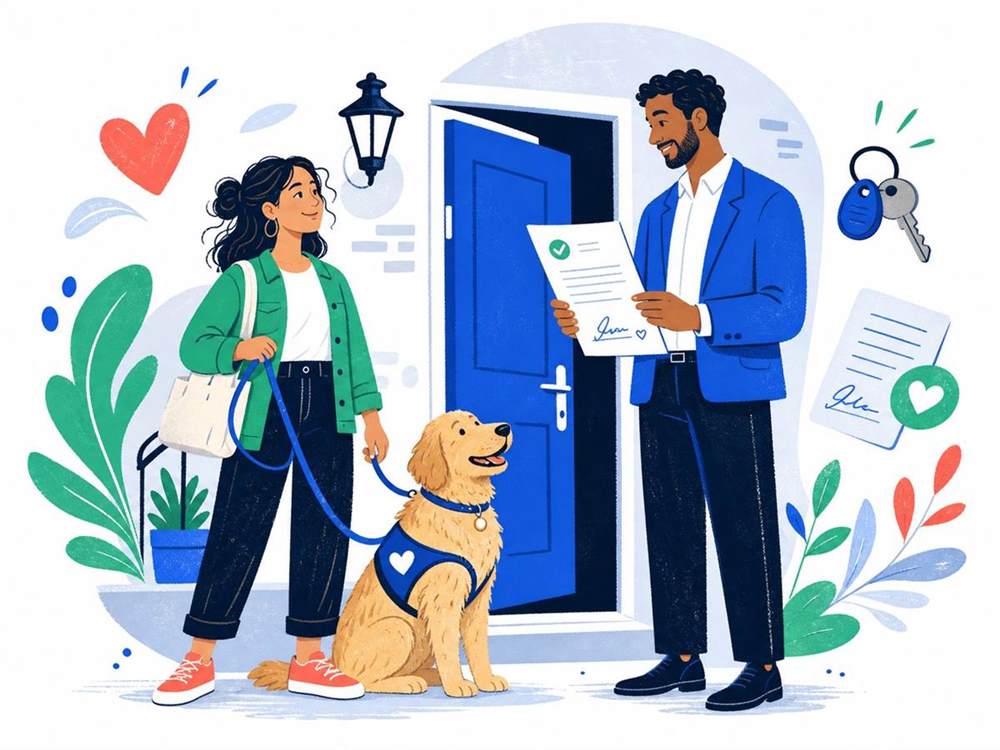
If you qualify, provide your supporting documentation to your housing provider and request a reasonable accommodation.
What a reliable New Mexico letter should show
ESA registration, certificates, and identification cards do not establish a disability-related need. Reliable documentation should be based on a genuine professional evaluation.
A professional authorized to provide services in New Mexico
Current professional license information and contact details
Confirmation of a disability-related need without unnecessary diagnosis details
Evidence of a genuine clinical evaluation
Clear verification information for the housing provider
New Mexico ESA letter FAQs
How do I get an ESA letter in New Mexico?
Complete an assessment and undergo an evaluation with a qualified mental health professional. If you qualify, you may receive supporting documentation for a housing accommodation request.
What should a legitimate New Mexico ESA letter include?
It should contain professional contact and license information, along with confirmation of a disability-related need based on an appropriate evaluation.
Is my New Mexico ESA letter valid for no-pets housing?
A qualifying emotional support animal may be approved as a reasonable accommodation under the Fair Housing Act, even in housing with a no-pets policy.
Who can evaluate me for an ESA letter in New Mexico?
A qualified mental health professional authorized to provide services in New Mexico can evaluate your circumstances and determine whether you qualify.
Does New Mexico require ESA registration or certification?
No official ESA registration or certification is required under the Fair Housing Act. Appropriate supporting documentation should come from a qualified professional evaluation.
If your housing provider requests verification
Ask for the specific question or form in writing, whether it comes from a property manager or a screening platform such as PetScreening. Contact support through a secure channel so the request can be reviewed with the clinician where appropriate. Do not alter a signed letter yourself or send a complete clinical intake to a housing provider.
Confirm the scope and any separate charge before requesting additional paperwork. A letter does not guarantee approval by a particular property or platform. If you have more than one animal, explain the need for each animal to the evaluator.
Contact MyPetESA supportCurrent federal and state guidance
HUD’s May 22, 2026 memorandum changed its federal enforcement approach to animal accommodation complaints. An ESA letter should not be presented as a guarantee of HUD enforcement. State and local protections and the facts of an individual request need separate consideration. Review current official resources before relying on older guidance.
Editorial content updated November 14, 2026. Educational information, not individualized medical or legal advice. MyPetESA connects clients with independent professionals; the evaluating clinician determines whether documentation is appropriate.